
An ankle sprain is a common event that millions suffer/experience each year. For many, the recovery is quick. However, for others recovery takes longer.
Why do some ankle sprains seem minor compared to others? Well, that partly depends on the severity of the sprain.
A mild (grade 1) is just a small stretch of the outer ankle ligaments. Typically, there is minimal to no swelling or bruising. Often those individuals will be able to “walk it off” in a matter of days to two weeks. With a moderate (grade 2) sprain there is likely to be some bruising and swelling and more associated pain. These individuals might try a brace, walking boot, or even use crutches for a period of time. Recovery time here is generally 2-4 weeks. For higher level sporting activities it may take a bit more time to feel fully comfortable. Finally with a more severe sprain (grade 3), there is likely to be significant swelling, bruising, and pain. Here the ligament is partly or fully torn. In most cases the individual will spend time in a walking boot and on crutches to allow. For many they can feel reasonably normal in 4-6 weeks, but for a return to sporting activities it may take 2-3 months.
Is there a way to accelerate healing?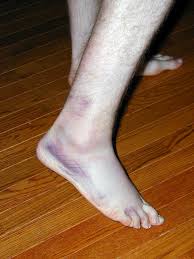
Potentially with the right treatment, working with a physical therapist, a person may be able to recover more rapidly. Ultimately the body takes time to heal but it can be coaxed forward faster at times.
Are there risks for future ankle sprains?
Certainly, there are risks as some sporting events or activities come with a risk of sprains. However, there are steps to reduce those risks which can be learned through proper rehabilitation. Additionally, with multiple sprains of the same ankle a person could develop a condition called chronic ankle instability. Basically, this is increased looseness of the joint that happens as the ligaments get too stretched out. BUT…if a person puts in the work to rehab properly after a sprain, they can reduce the chance of this happening.
The problem is that once many no longer have pain they are less likely to participate in rehabilitation or keep up the program designed for them. If you would like to avoid future ankle sprains, it would be wise to take measures now to prevent issues down the road.
Want to learn more about how to prevent and/or recover from ankle sprains?
Click the following LINK to connect with an expert today
0 Comments