
A frozen shoulder is a common issue resulting in pain and limited motion. It may impact a person’s dominant arm but does not have to. In general, a frozen shoulder impacts people over 40 and is more common in women. Those who are diabetic and have other auto-immune issues may also be more likely to suffer from this condition.
Frozen shoulders tend to sneak up on people. For some there may be a specific incident that is a trigger, but for many there is not one specific event. Little by little the person will notice a loss of shoulder motion and maybe some pain. Over time though, pain tends to be the dominant issue. That, plus significant impact on the ability to use the affected arm for daily function.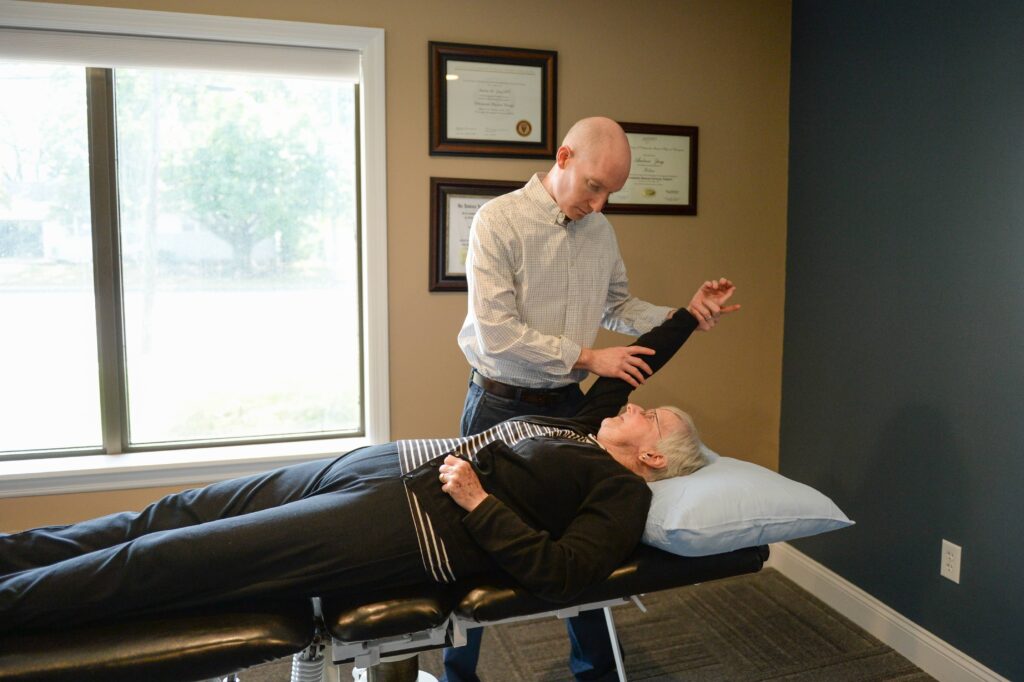
Is there anything that can be done to treat a frozen shoulder? Yes
There are two main treatment paths. One involves an injection and time or completing a sheet of exercises a doctor prints off for you. An injection may reduce the pain but does not address the cause. This path could take 1-2 years. Or option TWO, working with a physical therapist to address the pain, loss of mobility, and impact on daily function.
How can a physical therapist help?
By working to reduce the level of irritation and pain to enable the person to better use their arm for daily activities. This is accomplished via some combination of hands-on treatments and active movements. It is important to find a balance with treatment that does not result in marked increased pain during or after treatment. If pain increases too much, it could negatively affect function.
How quickly can a person recover if they work with a physical therapist?
Well, that depends on how severe the condition is prior to seeking treatment. Generally, the lower the irritability, the quicker the response. However, exact timelines with respect to a frozen shoulder are quite variable. As mentioned above, complete resolution could take many months. That said, treatment under the guidance of a physical therapist can speed up the process and help people to regain functional mobility more quickly. Additionally, people can learn to better manage the process of recovery.
If you or someone you know is struggling with a frozen shoulder, seeking care sooner than later will help one recover more quickly. Not sure where to begin? Click the following Link to connect with an expert today.
0 Comments